Closing Cost Information

Closing Cost Information

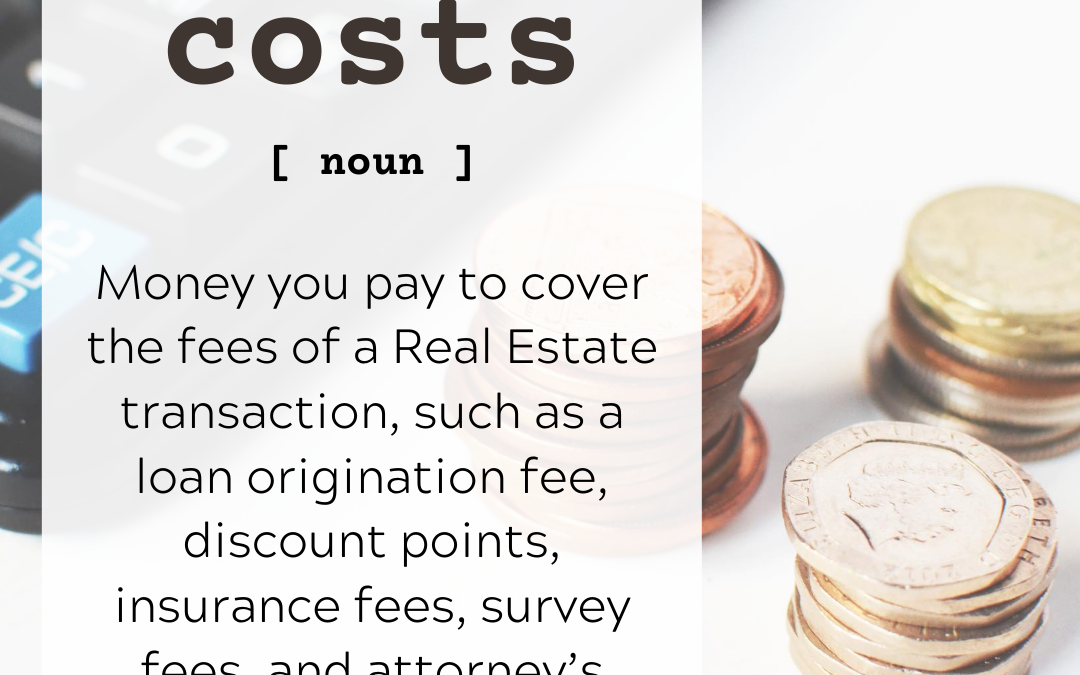
Closing costs will vary, depending on the financing arrangement and on selling price of the home, and these are approximations. Typically, closing costs paid by the buyer include the following:

  • Loan Origination Fee – 1% of the loan amount.
  • Discount Points – 1% to 2% of the loan amount, depending on the mortgage interest rate.
  • Appraisal Fee – $475
  • Credit Report Fee – $50
  • Pre-Paid Mortgage Interest – The interest pre-paid by the purchaser for the period between the closing date and the end of the current month.
  • Hazard Insurance Premium – Lenders require that the hazard insurance be pre-paid for one year and that two additional months’ premium be held in escrow to cover the first two months of the following year. The first year’s premium is approximately .3% of the selling price.
  • City / County Property Taxes – A reimbursement to the seller for pre-paid property taxes covering the period between the closing and the end of the tax period.
  • Title Exam / Closing Fee – The attorney’s fee is generally $350 to $500.
  • Title Insurance – A one-time premium, approximately .4% of the selling price.
  • Private Mortgage Insurance – Insurance required by lenders, paid for by purchasers, for loans with loan to value ratio greater than 80%.
  • Recording Fees & Taxes – These fees cover recording of the deed and the mortgage with the city or county and the state. They are approximately .4% of the selling price.
  • Survey – The fee for the survey, if required, will be in the range of $200 – $250. The figure will be higher if acreage is involved.
 

Where Will You Go If You Sell? Newly Built Homes Might Be the Answer.

Where Will You Go If You Sell? Newly Built Homes Might Be the Answer.

Do you want to sell your house, but hesitate because you’re worried you won’t be able to find your next home in today’s market? You’re not alone, but there’s some good news that may ease your worries. New home construction is up and is becoming an increasingly significant part of the housing inventory.

That means when you go to put your house on the market this summer, considering newly built homes is crucial for expanding the options you’ll have for your next move.

Near-Record Percentage of New Home Inventory

Newly built homes today make up a near-record percentage of the total number of homes available for sale (see graph below):

In fact, as the data shows, newly built homes now make up 31% of the total for-sale inventory. Over the past couple of decades, newly built homes made up an average of only around 13% of total housing inventory from 1983 to 2019.

That means the percentage of the total available homes that are newly built is over two times higher than the norm.

Why This Matters to You

Overall, the supply of homes for sale is still low. And when there’s limited supply, it’s crucial to explore all of your available choices. New-home construction has emerged as a game changer with increasing inventory. Not to mention, recent data shows it’s gaining even more momentum as more newly built homes are underway and will be coming to the market in the months ahead.

Robert Dietz, Chief Economist at the National Association of Home Builders (NAHB), highlights the importance of newly built homes for those looking to buy in today’s housing market. Dietz states:

“With limited available housing inventory, new construction will continue to be a significant part of prospective buyers’ search in the quarters ahead.”

Don’t overlook this growing market segment and risk missing out on great opportunities to find your ideal home. Since new home construction accounts for roughly 31% of total for sale inventory, you could be cutting nearly one in three options from your search if you don’t consider newly built homes.

If you’re looking to make a move, I can help you sell your current house and explore newly built options in your area. I have the expertise you need to handle both sides of the process so you can move out of your current house and into your brand-new dream home.

Bottom Line

Now’s the time to sell your house and take advantage of the momentum that’s building in new home construction. Let’s connect so you have a guide throughout the selling and buying process. Together, we can make your transition to a newly built home a reality.

Summer Buying and Selling Guides

Summer Buying and Selling Guides

Do all those confusing headlines about the housing market leave you with more questions than answers? Let’s connect so you can get your free guides and the knowledge you deserve.

Writing the Offer

Writing the Offer

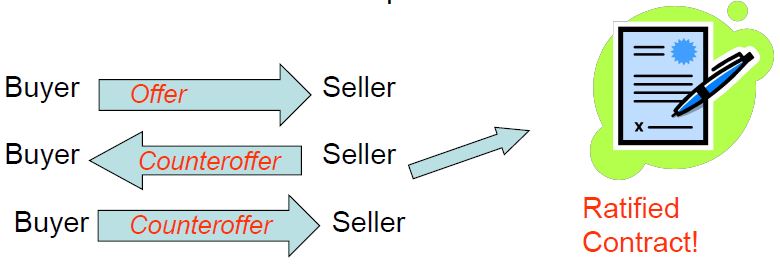
Congratulations! We found the right home…now what? Once you have found THE home …now I go to work helping you make a competitive offer based on market research.  Terms that we will need to decide include: sales price of home, close date, seller contribution to closing costs and any other contingencies to the contract.  I will advise you every step of the way.

  • Review the Contract: The best way to prepare for the contract phase of the transaction as a buyer is to review a blank copy of the purchase contract. Reading the contract prior to making an offer will make you much more comfortable during the negotiation phase.
  • Offer: While much attention is paid to the asking price of a home, a proposal to buy includes both the price and terms, as listed above.  I will help guide you in the negotiation process as we work to come to an agreement for you and the seller.
  • Seller contributions: Buyer may ask Seller to pay some of the closing costs.
  • Strategies to make your offer competitive: Price, terms and conditions.
  • I will explain the contract, attached forms and offer process to you.
  • Be prepared:
    • Have your mortgage pre-approval ready.
    • Have your funds available – Earnest money deposit with contract.
    • Ask questions about the contract and the process.


Visit houselogic.com for more articles like this.

© Copyright 2023 NATIONAL ASSOCIATION OF REALTORS®

The Home Search

The Home Search

Educating yourself on your local market and working with a knowledgeable Realtor like myself can help you narrow your priorities and make an informed decision about which home to choose.  I will set you up on an internet “portal” called OneHome, which is linked directly to the MLS fitting the criteria of homes you are looking for. Then as we narrow down the search, we go see those homes!

  • Assess your wants & needs:
    • There are three criteria every buyer uses to find their home: location, price and style/condition. These criteria, along with your “needs and wants,” will determine the properties we search for and the homes we initially view.
  • Shop for a Home:
    • The process of viewing homes provides you with information in order to make the best decision possible.
    • Helping you find a home is a process of elimination; not a process of selection.
    • Viewing homes you don’t like is not a waste of time; it helps build a frame of reference to help you find what you do like.
    • Your Realtor will email you properties that meet your criteria, help you select homes to see, and will add expert opinion of the home.
    • Decide on the home you want to make an offer on

Start Your Home Search

New vs. Resale Home

  • New Home or condominium allows you to pick your floor plan and your finishes.
  • New home or new condominium have warranties.
  • VA Condominium Act requires the Developers to provide a 2-year warranty on the structure of the building.
  • You can do a walkthrough and create a “Punch List”.
  • New homes tend to be a bit more expensive than re-sales.
  • For new homes, you can save on the inspection costs.
  • For new homes, the price is usually fixed– you can negotiate the price on resales.
  • For Resale or used Homes, we recommend that you purchase a Home Warranty.

House vs. Townhome or Condominium?

  • House: You own the house, the land and are responsible for everything
  • Townhome or Condominium: You own the inside. The outside of the building, the land, and the amenities are owned in common. You pay a monthly fee for the maintenance of the common areas. (Not included in mortgage payment)
  • Factors to consider:
    • Cost for upkeep
    • Ability or willingness to do exterior maintenance
    • Do I want or need a yard? Do I want to maintain it?
    • Amount of living space needed
    • Amenities, pool, fitness center etc.?
    • Parking?

Homeowners Association Documents

  • Docs, Association documents, Public Offering Statement (POS), or Condo Docs are the rules and regulations for neighborhoods of single family homes or condominiums.
  • Documents specify what you can and can’t do e.g., fence requirements, pet restrictions, rental restrictions.
  • The Docs also contain the association budgets.
  • Seller must deliver a current copy of the Docs to the Purchaser.
  • Purchaser has 3 days (re-sales) or 10 days (new homes) to review docs and rescind the contract. Rescission must be in writing.
  • Read the documents and ask your realtor if you have questions.

Start your home search here.